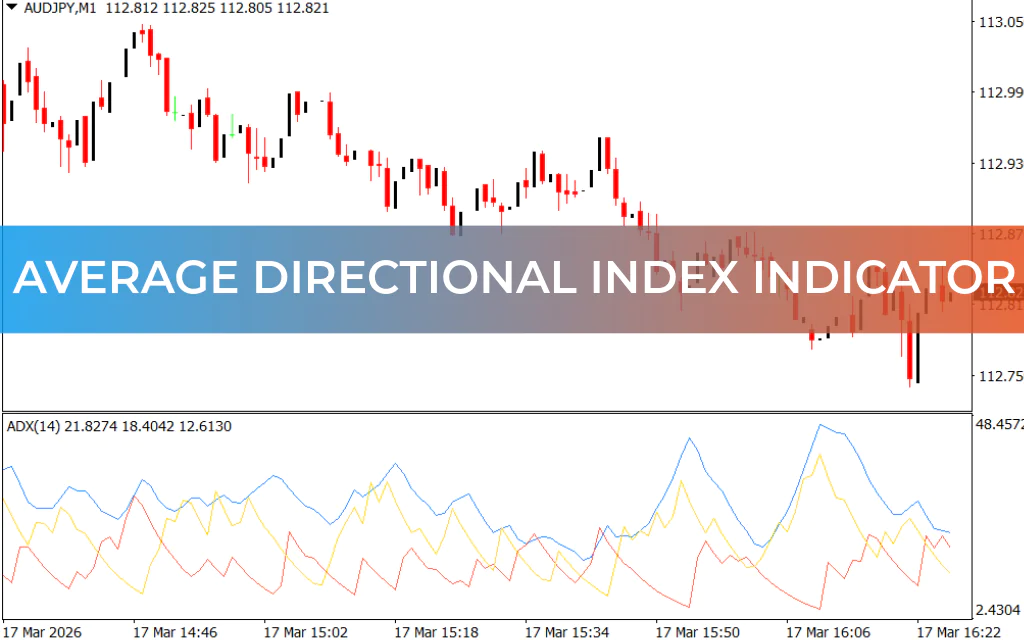
The Average Directional Index (ADX) is a technical indicator designed to measure the strength of a trend, regardless of its direction. Developed by J. Welles Wilder in his book New Concepts in Technical Trading Systems, the ADX helps traders determine whether a market is trending and how strong that trend is.
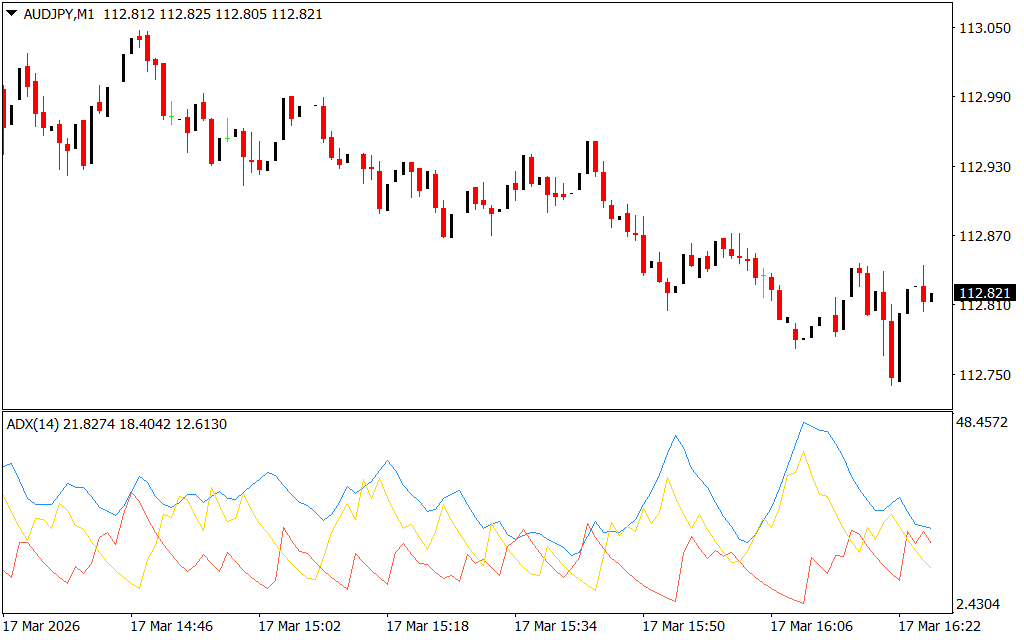
What is the ADX Indicator?
The ADX indicator is composed of three lines:
- ADX line – Shows the strength of the trend on a scale from 0 to 100.
- ADX > 25 → Strong trend
- ADX < 20 → Weak or no trend
- +DI line (Positive Directional Indicator) – Measures the strength of upward price movement.
- –DI line (Negative Directional Indicator) – Measures the strength of downward price movement.
The ADX is non-directional, meaning it only measures Trend Strength, not the trend’s direction.
How the ADX Indicator Works
- Trend Strength:
- Rising ADX → Trend is gaining strength
- Falling ADX → Trend is weakening or ending
- Directional Signals:
- +DI above –DI and ADX > 25 → Buy signal, indicating a strong upward trend
- –DI above +DI and ADX > 25 → Sell signal, indicating a strong downward trend
- Avoiding Trades:
- ADX below 20 → Market is ranging or trendless, so trend-following strategies may not work
ADX Trading Strategy
Buy Setup
- +DI crosses above –DI
- Wait for Price Action confirmation (bullish candlestick patterns, breakouts, etc.)
- Place stop-loss near the recent swing low
- Exit when trend changes or +DI dips below –DI
Sell Setup
- –DI crosses above +DI
- Wait for price action confirmation (bearish candlestick patterns, breakouts, etc.)
- Set stop-loss near the recent swing high
- Exit when trend changes or –DI dips below +DI
Tips for Using ADX Effectively
- Combine with other indicators: Use moving averages, RSI, or support/resistance zones for Trend Confirmation.
- Use higher timeframes for trend strength analysis and lower timeframes for precise entry points.
- Avoid trading in low ADX conditions (below 20) as trend-following strategies are less effective.
Pros and Cons
✅ Pros:
- Clearly identifies trend strength
- Helps filter ranging vs trending markets
- Can be combined with DI crossovers for buy/sell signals
❌ Cons:
- ADX does not indicate trend direction on its own
- Signals may lag in very fast-moving markets
- Works best with other confirmation tools
Conclusion
The ADX indicator is a reliable tool for assessing trend strength. By combining the ADX with +DI/–DI crossovers and price action confirmation, traders can identify strong trends and optimize entry and exit points. Like all indicators, ADX is most effective when used alongside other technical tools.
FAQ
1 Download
Published:
Mar 17, 2026 11:28 AM
Category: